Sunday, February 27, 2011

Final book jackets and recent journals

Man, posting all of this stuff can get confusing... I have my stuff up on my behance site (behance.net/noelrivard) and on a pdf for class and printed out and now I think i'll put it up here for those of you who didn't see it. 

designers choice

image based

 
type based


Journal number three

Sagmeister talks about the realization of happiness and not about feeling it.  He says that the realization is easy the easy thing to do.  That is why the designer who recreated the subway posters was able to evoke such true happiness, because the people who see his work are taken aback with his design, THEN feel the emotions that he has tried to create.  more later

Monday, February 14, 2011

Its crunch time!!!

For this project, I chose to go with a different perspective than originally planned.  Rather than an all out crazy fest of image, vibrant color and sloppy text I picked a simpler compound word to describe the feeling.  

MEANINGFUL NONSENSE


let me know what you think! please be critical!

Sunday, February 13, 2011

Good old Dieter Rams... and not so old Don Norman

don norman (design and emotion)
1. beatuy
2. function
3. reflective

Don spoke about the good design... not only pretty stuff or convinient things, but honestly good design.  Design as if it were intended to fulfill all 10 of Dieter Rams’ principles.  From what he percieved from Rams’ studies, Norman took a twist on that information by exploring the emotional connotations of design.  As listed above, good design should make you feel good... feel the beauty, the functionality (that it is doing something that makes you happy) and that it can reflect the feeling back. 

If I were to ask Don Norman a question, it would probably invovle the reflective aspect of good design. I am not quite sure as to what he means by that. Maybe something like, “Don, if a product should reflect good design, what does it look like for a product to reflect BAD design?”

audience personas for The Buddha of Suburbia

#1
Amy is a freshman at the University of Virginia majoring in journalism.   She is currently living in a dorm room alone because her roommate has recently moved back home to attend cosmotology school.  Amy spends most nights listening to country music (mostly Taylor Swift) while reading for her upper-level english class.
Her favorite books include Jane Eyre, Sarah Plain and Tall and other more feminine novels.  Her initial intentions were to go to school to be and English Literature professor.  Then she joiner her high school yearbook staff and decided to take that route instead.

She eats mostly organic foods and wears only clothing made in the United States; the only exception is when she is running low on cash.  She works at a used book store where she reads more than she actually works.  Her favorite part of the job is the three-legged cat that roams the store to greet customers. Most of her friends consider this a perfect example of her appreciation for the quarky and uncommon.  


#2
Marshall just graduated with honors from Grinnell and moved to New York to begin a career in the fast paced work of finance.  He has been so consumed by getting a good education and winning his cross country races that he has yet to consider finding a girlfriend/wife.  He finds himself feeling lonely most nights and hasnt mustered up the  courage to put himself out there.  His parents and most of his co-workers assume he is homosexual.  He finds this hard to believe although he has never had a romantic relationship.  
He shops at small boutiques and shops in the wealthier areas of town.  His outfits are all based on images he found in Men’s Health. He listens to the music his parents always had on as a child, mostly bands like Pink Floyd and The Beatles. 


#3
Freida is a 23 year old mother originally from Mumbai but currently stationed in Texas.  Her family moved the United States when she was a little girl to avoid the trying financial times. She has many american friends who appreciate and understand her eccentric cultural background and uplifting personality.  But when she is alone at home while her husband, Waleed, is at work at the hospital, she finds herself questioning her indian heritage.

Her days consist of caring for her 14 month old girl, preparing traditional Indian meals, cleaning the apartment and watching a few soap operas. Freida’s closet is full of her mother and grandmother’s tunics and head dress in beautiful colors and patterns.

She dreams of someday going back to India to travel the country at her own accord. Yet, she is perfectly accustomed to the american lifestyle.


Monday, January 31, 2011

design firms you need to know

CSA Design (http://www.csadesign.com/)
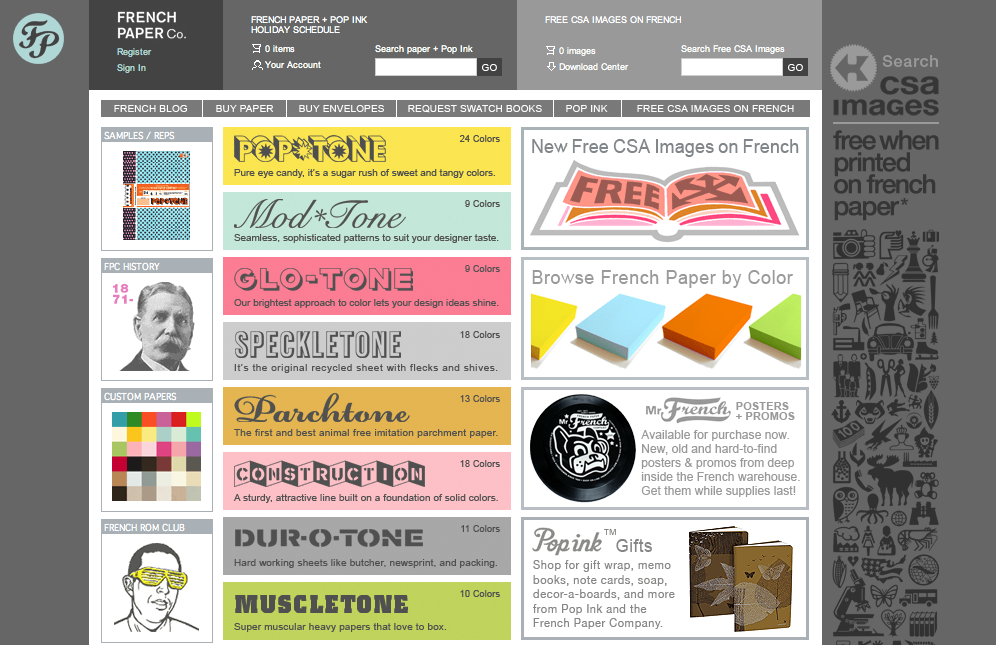
founders of Mr. French paper company


Hatch Design San Francisco, CA (http://www.hatchsf.com/)
"the best design is honest, hands on and human."

Michael Austin wine series designed by the people at Hatch


160 over 90 Philadelphia, PA (http://www.160over90.com/)
"doing it and doing it and doing it well"

An area of the office where team collaboration breaks loose.

A visual identity designed for the City of Boston.


Pentagram London, New York, Austin and Berlin (http://www.pentagram.com)
The worlds largest independent design consultancy

most recent branding for the Museum of Modern Art.


Werner Design Werks St. Paul, MN (http://www.wdw.com/)


personal favorite. i love the web design and type treatment here

Hey! this is the laundry detergent I use at home.  Just
goes to show... good design is everywhere!!!!

Willoughby Design Kansas City, MO (http://www.willoughbydesign.com)
"uncovering insights to help clients connect with their audiences at every touchpoint"

The people at Willoughby created a Brand Dictionary... 
AIGA's A to Z language about branding


designers you need to know

Saul Bass (May 8, 1920 – April 25, 1996) was on of the fathers of American graphic design along with Paul Rand and Bradbury Thompson. He is best known for his design on animated motion picture title sequences.


The Ghost in the Underblows, Alfred Young Fischer Some of 
his most inventive branding projects were formed from overtly 
simple marks made into logos, and eventually, brands.


Alexander Girard (May 24, 1907 – 1993) was a textile designer born in NYC and raised in Florence, Italy.  I found the work he did for the Eames to more interesting than some of his graphics.  


The Ghost in the Underblows, Alfred Young Fischer I can picture this 
fabric covering a small, decorative pillow or something cute like that


Alvin Lustig (1915-1955) American graphic designer and typeface designer.  He was highly influenced by Swiss designer Jan Tschichold. 

The Ghost in the Underblows, Alfred Young Fischer


Alan Fletcher (27 September 1931 – 21 September 2006) British graphic designer.  One of his most famous legacies is the visual identity for the Victoria and Albert Museum in London. 

1999 version of the American Art Book... of which I own the four most
recent editions. I'm sure it was a huge honor to get this commission


Alex Steinweiss (March 24, 1917) Born in NYC.  He is responsible for the design of packaging for music of all kinds. He was the original art director for Columbia Records in 1939.


Ray and Charles Eames (the power couple of the century) American designers leading the way to modern furniture design and architecture. 

Though the Eames did not design this ad, I appreciate the way
the designer chose to portray their work. This is a good example
of a way to visually describe a personality of an architect.


Maira Kalman (1949) American born artists, author and designer.  She is a successful business women still as she works for authors and companies and doing promotional work for herself. 

Maira's spin on a popular poster from
world war II.  Still a recognizable 
image even though she painted it


Steven Heller (1950) American author, critic, journalist and editor who specializes in topics related to modern graphic design.  His list of accomplishments is overflowing with books, articles, talks and designs.  

a cover of a book co-written by heller


Tuesday, January 25, 2011

Homework: Semiotics

1. Definitions

SIGN: (one of the basic building blocks for creating meaning) a visual representation formed by a societies that make them

a music note to indicate the sound made by an instrument 


INDEX: non-arbitrary relationship that exists between two meanings

smoke = fire


SYMBOL: an object or image with obvious meaning

a hand shake as a greeting


2. "This Means That: A Users Guide to Semiotics" by Sean Hall
A quite intriguing read in comparison to most articles on the design process.  I felt more aware of the necessity for signs and symbols when trying to communicate a message (which is what we do as designers, right?).  Most of all, I appreciated the useful examples and easy-to-read layout of the article.  

3. What makes a good book jacket?
Well according to John Gall a successful book cover, "conveys the essence of the book in a unique and surprising way that maybe pushes the design envelope a bit"

THE GOOD: 


These covers share a feeling, an emotion of sorts, that will more than likely be evoked within the book.  This is a good thing! Even better, they do not completely give away anything. The audience is still guessing a little bit about what lies inside.

THE BAD:


The designs of these are too designed... yes, that is a thing! They are too forceful in trying to jump off the shelf at the consumer. This is not just a personal style opinion, even though i am thoroughly disgusted with the unicorn tiles. They are all just too busy to be powerful enough for me to pick up.